
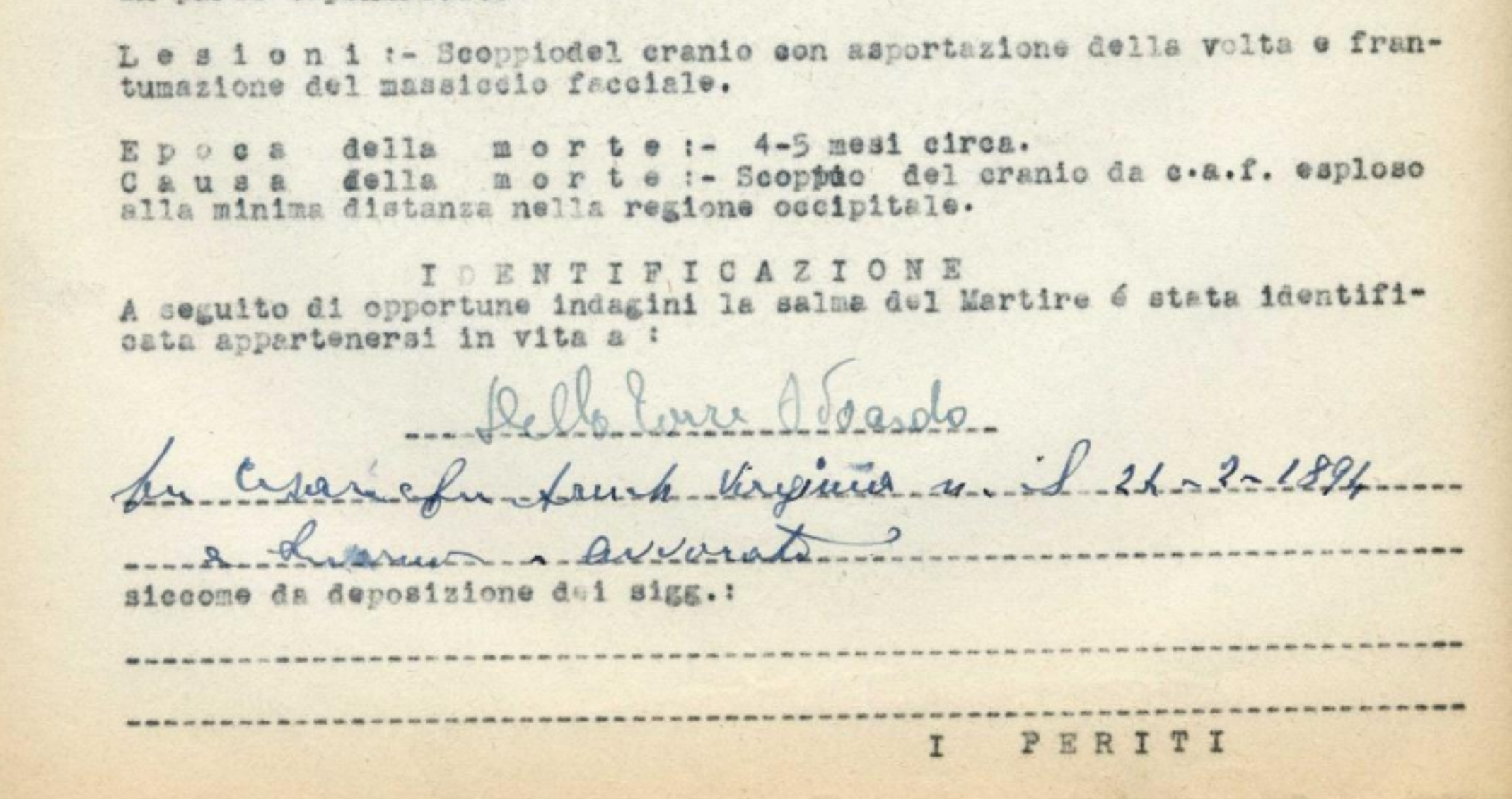
On 24 March 1944, the Fosse Ardeatine massacre took place in Rome where 335 men, between 15 and 74 years old, were murdered by German troops with a gunshot to the head. Among them also the lawyer. Odoardo Della Torre, interned in the Urbisaglia camp from June to October 1940.
On the eightieth anniversary of the massacre, the Casa della Memoria in Urbisaglia, the ANPI, the Istituto Storico of Macerata and the Giustiniani Bandini Foundation remembered the tragic event with a conference held on Friday 5 July 2024 in the Aula Verde of the Abbadia di Fiastra in front of a of a large, attentive and, at times, moved audience.
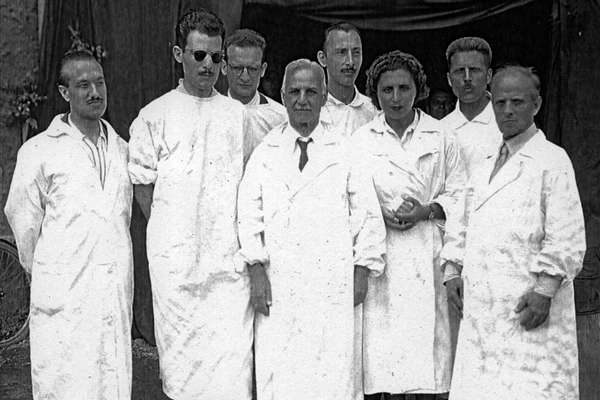
The meeting was chaired by prof. Lina Caraceni, Professor of Penitentiary Law at the University of Macerata. It is actually the University of Macerata that houses the archive of Attilio Ascarelli, the forensic physician who, in June 1944 was in charge to lead the team for the recognition of the 335 people killed at Fosse Ardeatite (Roma).
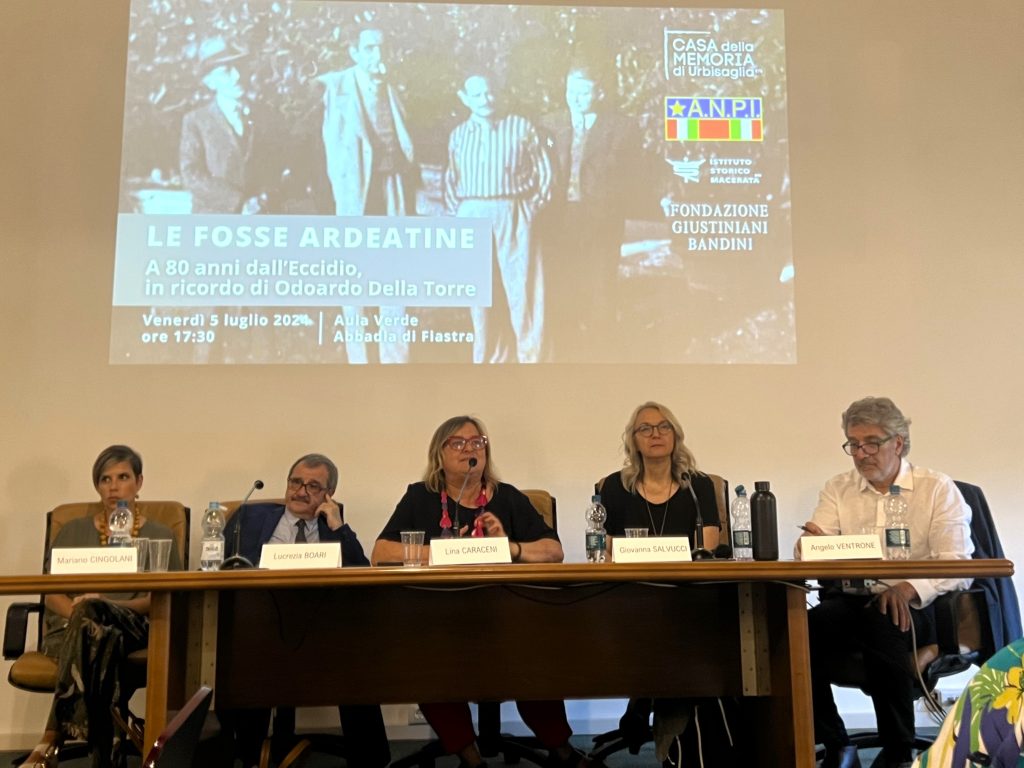
The meeting was introduced by prof. Angelo Ventrone, who presented a report entitled “The death of death: Nazi and Fascist violence in World War II”. To make sure that violence against the enemy can be exercised, – explained the professor. Ventrone -, it is necessary to break the bond of humanity that inevitably unites executioner and victim. For this reason, the victim is first “animalized”, i.e. treated like an animal (better if harmful or repellent, such as fleas, lice, etc.); then the victim is reduced to a “thing”, a simple object to be used or disposed of at will. Furthermore, totalitarian regimes add another element: not only they hide the corpses, but they even try to erase the memory of their victims’ existence, as if they had never existed. This is why we can talk about the “death of death”.
Dr. Giovanna Salvucci read the biography of Odoardo Della Torre, a lawyer born in Livorno in 1894, registered as a “Socialist” by the Public Security authorities and subjected to “careful and assiduous surveillance” for the entire peeriod of the Fascist Regime. Interned in the Urbisaglia camp at the outbreak of the Second World War, he was later transferred to Camerino and then to Sant’Angelo in Vado because, according to the Macerata Police Headquarters, in Camerino he had “contracted many relationships, especially with professors and students” and therefore had to be sent away.
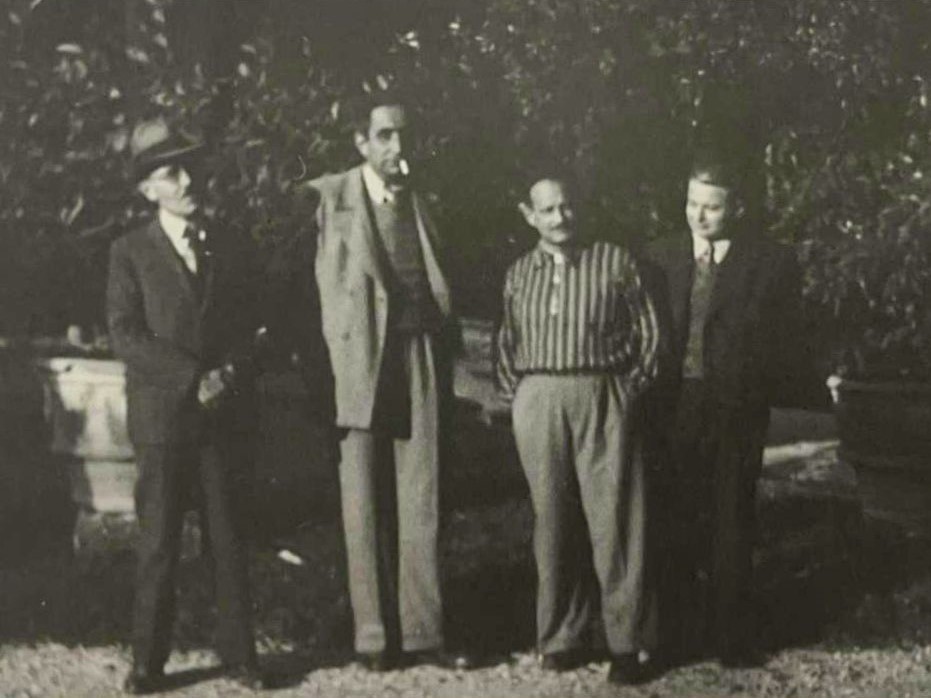
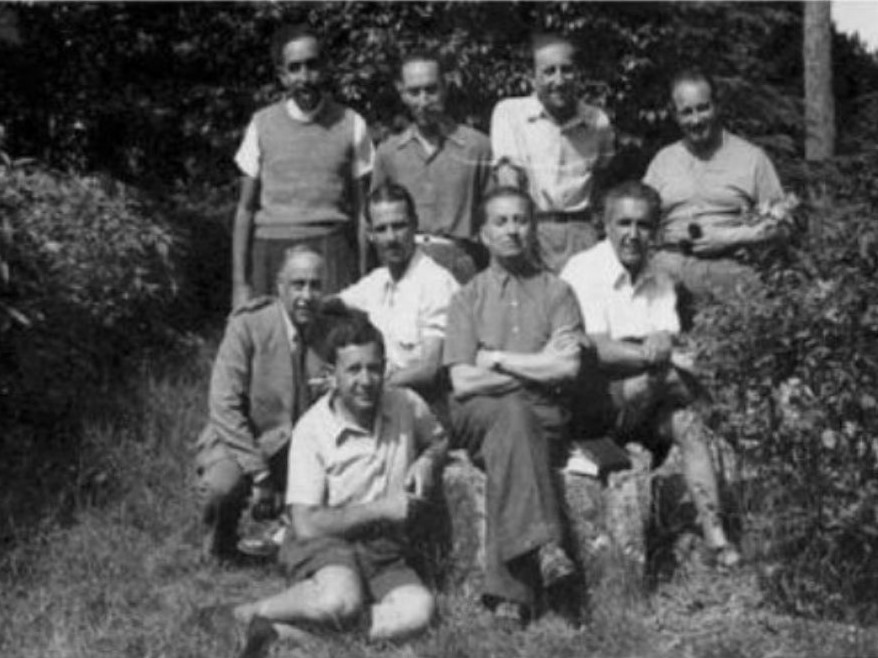
After the revocation of his internment, Odoardo Della Torre returned to Rome where, on 18 March 1944, he was arrested by the SS following a denunciation and, without being interrogated, locked up in cell no. 380 of the third wing of the Regina Coeli prison waiting to be transferred to Fossoli and then deported. On March 24, Odoardo Della Torre ended up on Kappler’s Judenlist and was killed with a gunshot to the back of the head together with the other 334 victims of the Fosse Ardeatine massacre.
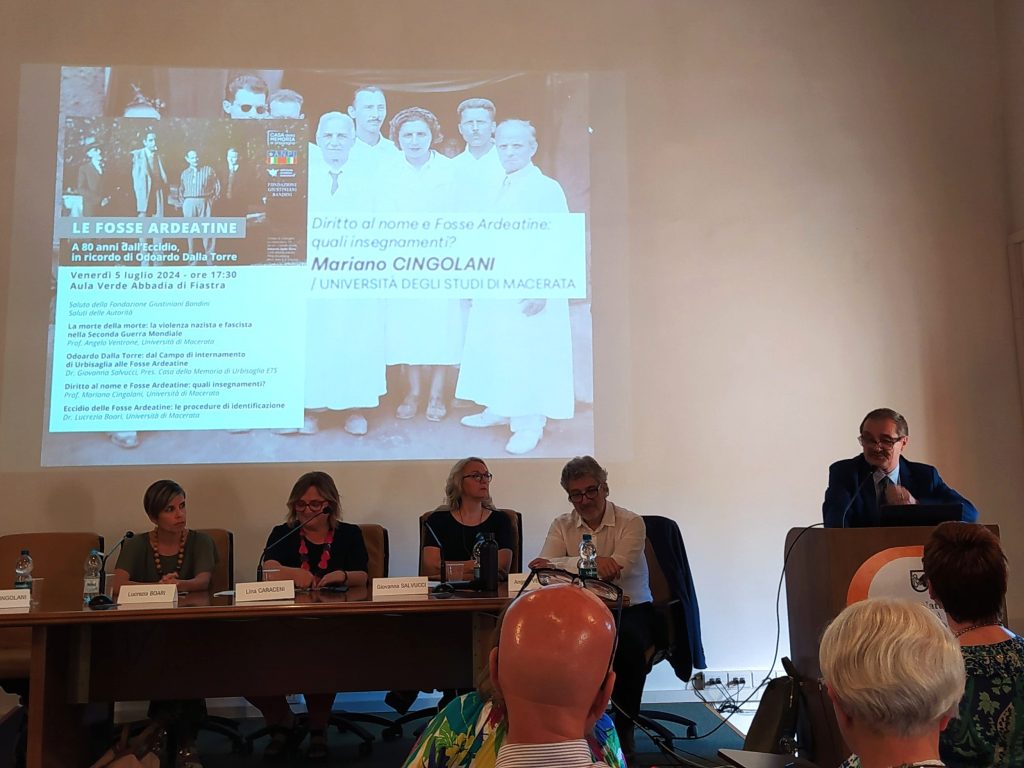
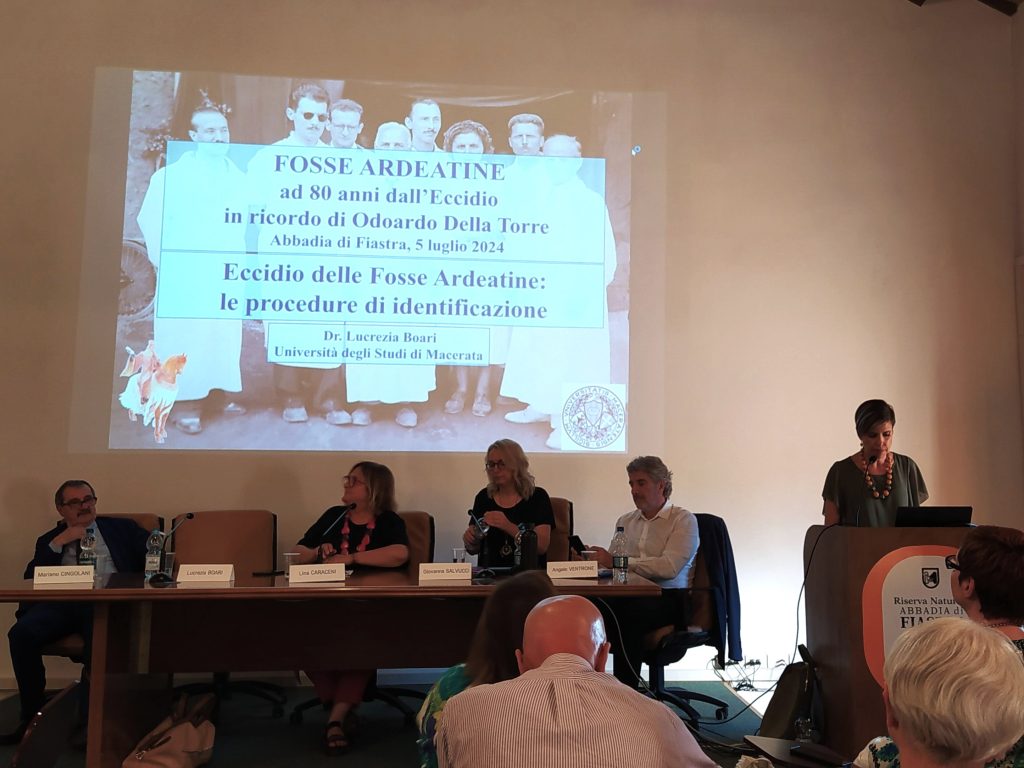
Prof. Mariano Cingolani (professor of Forensic Medicine at the University of Macerata) illustrated the problem of identifying victims in mass disasters and the value of the experience of the medical examiner Attilio Ascarelli and his team who, with an experimental technique developed specifically for the occasion, in 1944 ascertained the identity of almost all the victims of the Fosse Ardeatine massacre.
Dr. Lucrezia Boari (PhD in Forensic Sciences) specifically discussed the procedures adopted by Prof. Attilio Ascarelli which made it possible to reliably ascertain the identity of almost all the victims of the Fosse Ardeatine massacre, including that of Odoardo Della Torre. In the identification card, preserved in the “Fosse Ardeatine” collection, we read that the body appears “prone, with the legs strongly flexed under the abdomen and with the wrists tied behind the back.” The body was recognized based on clothing: coat, dress, vest, cuff. The identification report of body no. 247 was signed by his wife Giuseppina De Santis on 3 September 1944. The sarcophagus of Odoardo della Torre at the Fosse Ardeatine Mausoleum is no. 260.